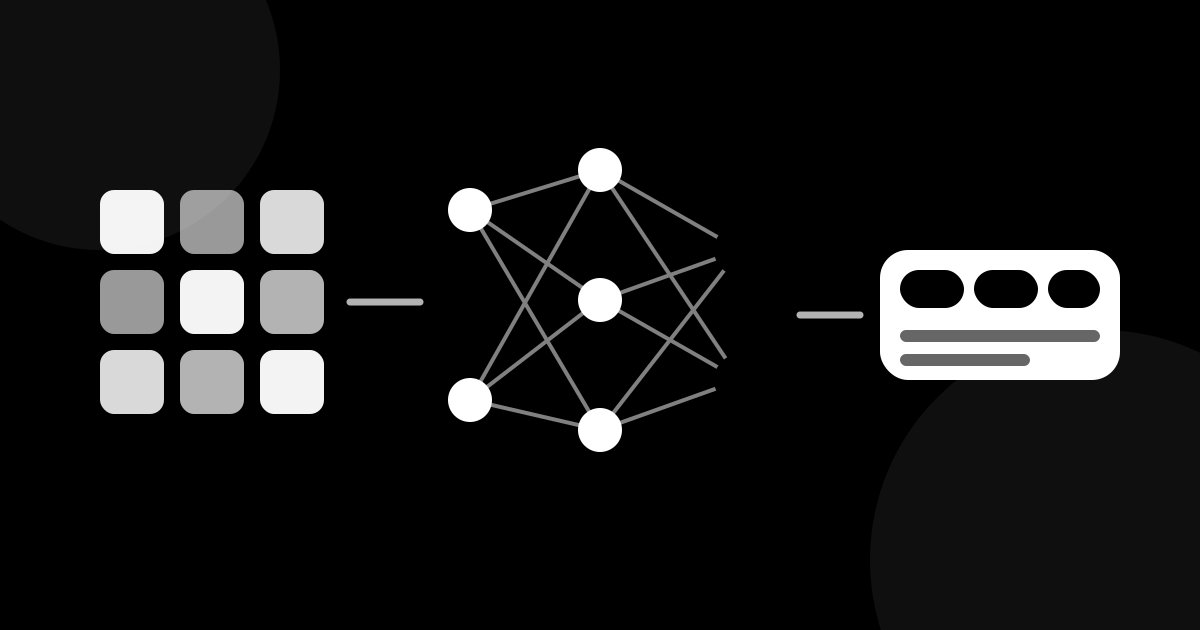
AI is software that learns from examples instead of following step-by-step instructions.
That one sentence is the whole idea. The rest of this article just makes it concrete.
Traditional software vs. AI
In traditional software, a programmer writes the rules: “if the email contains ‘you won a lottery’, mark it as spam.” It works until scammers change their wording.
With AI, nobody writes the rules. You show the system a million emails, each labeled spam or not spam, and it finds the patterns itself, including ones no human thought to write down.
An everyday example
When your phone suggests the next word, nobody wrote every sentence by hand. The model learned patterns from millions of examples of real text, so it can guess what usually comes next.
How does it learn? (no math)
Think of how a child learns to recognize dogs. Nobody gives a definition. The child sees many dogs, guesses, gets corrected, and slowly improves. AI training works in a similar loop:
- Look at an example.
- Make a guess.
- Compare the guess with the right answer.
- Adjust a little.
- Repeat millions of times.
Where you already meet AI
- Keyboard word suggestions
- Your photo app finding faces, pets and places
- Maps estimating your arrival time
- Music and video recommendations
- Spam filters in your inbox
- Chatbots like ChatGPT, Claude and Gemini
What it’s good at, and what it isn’t
Good at: working with language, spotting patterns, summarizing, drafting, translating and brainstorming.
Not reliable for: guaranteed facts (it can sound confident and still be wrong), knowing your private situation unless you tell it, and anything where a mistake would be costly and nobody double-checks.
Three common myths
- “AI thinks like a human.” It finds patterns in data. The results can look like thinking, but the process is different.
- “AI is always right.” It isn’t. Check anything important.
- “I need to know programming.” You don’t. Using AI well is mostly about asking clearly.
What do you need?
- A real question from your work or life
- Ten minutes a day
- Curiosity
Your first step
This week, pick one small real task, such as rewriting an email, planning a meal or explaining a topic you’re learning. Try an AI tool for ten minutes, then check the answer yourself. That small loop is how everyone starts.